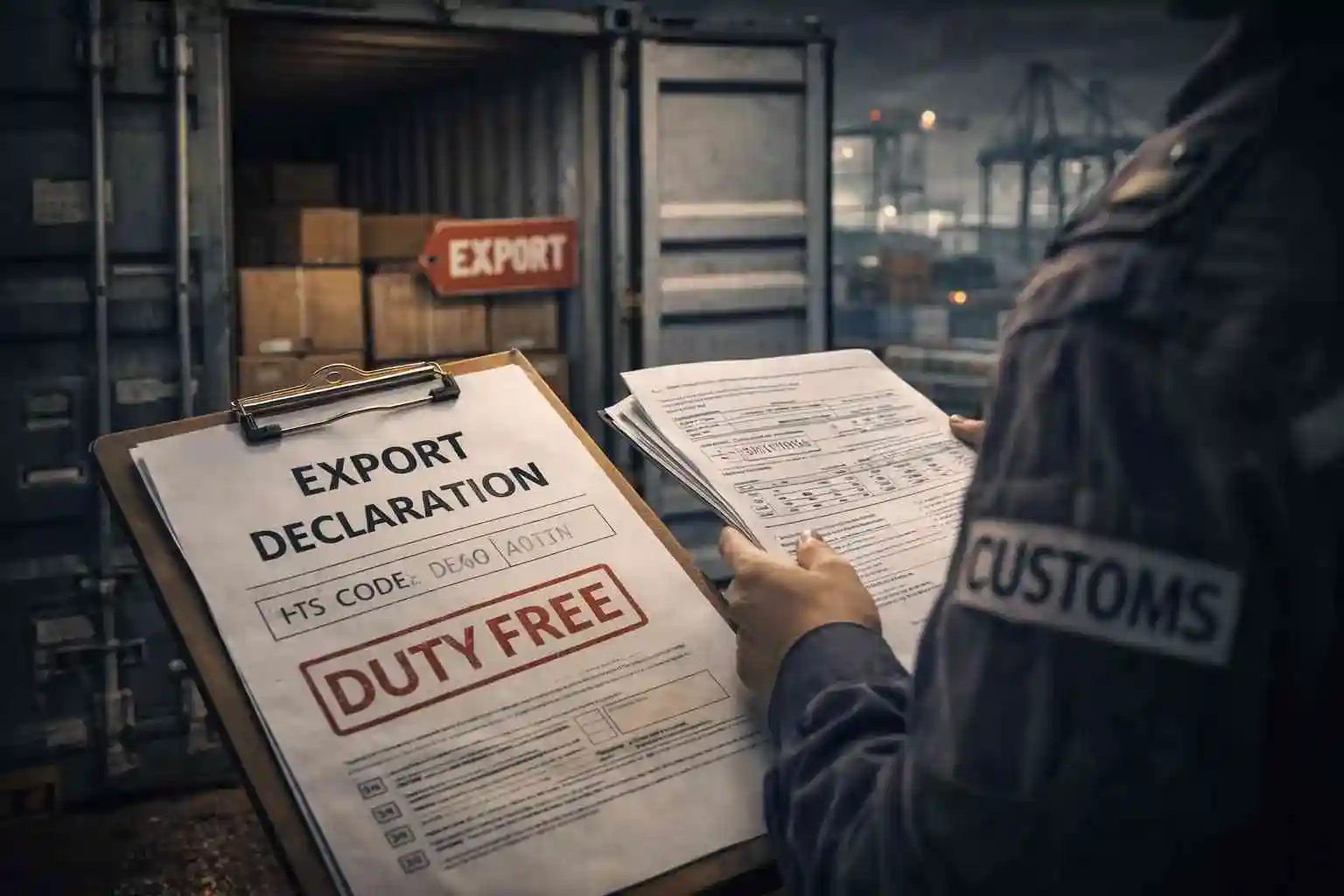


First Point of Entry Rule in GCC Customs: How Goods Enter Saudi Arabia, UAE, Qatar, Oman, Kuwait, and Bahrain
🧭 Introduction
For many importers, the phrase “GCC customs” sounds simple. A shipment lands somewhere in the Gulf, customs is cleared, and then the goods move to the final buyer. In reality, that summary hides one of the most important operational concepts in regional trade: the First Point of Entry rule.
If your goods arrive first in Saudi Arabia, that first customs event starts in Saudi Arabia. If they arrive first in the United Arab Emirates (UAE), the first customs event starts in the UAE. The same logic applies when cargo first enters through Qatar, Oman, Kuwait, or Bahrain. This matters because the first customs event shapes the shipment’s legal pathway, document handling, duty treatment, control logic, and onward movement inside the GCC customs environment.
For businesses importing from China, India, Turkey, Europe, or the United States into Gulf markets, this is not an academic point. It directly affects lead time, internal routing, customs declarations, permit coordination, transport planning, and landed-cost forecasting. A company that misunderstands the first point of entry may choose the wrong port, prepare the wrong document flow, or assume that goods can move from one GCC country to another without the correct customs structure. That is when delays begin.
The GCC’s Unified Guide for Customs Procedures at First Points of Entry was created precisely to standardize how imports, exports, transit, warehousing, temporary admission, express shipments, postal parcels, guarantees, and related procedures are handled at first-entry customs ports in GCC member states. That guide has been applied across first-entry customs ports since 2015 and is reviewed and updated based on implementation experience. In other words, the guide itself confirms that the operational center of gravity is the first-entry customs point.
Key principle: In GCC customs practice, the first place where imported goods enter the customs territory is not just a logistics milestone. It is the first legal customs event, and that event influences the rest of the shipment’s compliance journey.
🔹 What Does “First Point of Entry” Mean in Practice?
In practical terms, the first point of entry is the first customs port, airport, land border, postal gateway, express cargo gateway, or other authorized customs entry point where goods physically enter the GCC customs territory. Once that happens, the shipment is no longer just a transport movement. It becomes a customs matter.
This does not always mean the same thing as the final destination. A Saudi buyer might purchase goods from a supplier in Germany, but the shipment might first land in Dubai in the UAE. A Kuwaiti importer may buy from India, but the cargo may first arrive through Oman. A Qatari buyer may receive goods that first enter through Saudi Arabia by land, or through Bahrain as part of a specific logistics strategy. In all of these examples, the final market and the first customs point are not necessarily the same.
This is why importers, customs brokers, and freight teams must separate two questions:
- Where is the final commercial customer or user?
- Where does the first GCC customs event happen?
If those two answers are not coordinated early, customs friction appears later in the chain.
🌍 The GCC Customs Framework Behind the Rule
The GCC customs structure aims to facilitate trade and unify customs procedures across member states. The official guide explains that it was approved within the framework of the GCC Customs Union and applies to first-entry customs ports across the member states. That makes the first-entry concept central, not peripheral.
The GCC guide is not limited to one narrow procedure. It spans:
- Commercial and personal import
- Export and re-export
- Temporary admission
- Transit
- Storage in customs warehouses
- Storage in free zones and duty-free markets
- Import for re-export
- Refund of customs duties on re-exported goods
- Exemptions
- Currency, precious metals, and financial instrument declarations
- Postal parcels
- Express carriers
- Refund of deposits and release of bank guarantees
- Private and public customs warehouses
- Import/export of weapons and high-risk materials
- Destruction of goods
This scope is important because it shows that “first point of entry” is not only about standard commercial import. It also affects how goods are classified into other customs pathways from the moment they first arrive.
⚙️ Why the First Point of Entry Rule Matters for Saudi Arabia, UAE, Qatar, Oman, Kuwait, and Bahrain
The six GCC countries share a customs-union framework, but businesses still operate through real ports, real land crossings, real digital platforms, and real regulatory agencies. That means the first customs event in Saudi Arabia is not just “the GCC” in the abstract; it is a Saudi customs event. The first customs event in the UAE is an Emirati customs event. The same applies to Qatar, Oman, Kuwait, and Bahrain.
This distinction matters for at least six reasons:
- Document alignment: import documents must support the customs event that is actually taking place.
- Permit logic: controlled goods may require approvals that become relevant immediately at first entry.
- Declaration quality: the first declaration is where customs sees the shipment for the first time.
- Risk profiling: inspection decisions are made based on risk criteria at the first point of entry.
- Guarantees and movement control: some onward movements require financial or documentary security.
- Commercial timing: a route that seems cheaper at booking stage may become slower or more expensive if the first-entry customs path is poorly designed.
Importers often focus heavily on ocean freight, airfreight, or trucking price. But customs professionals know that the quality of the first customs event can be more important than the quoted transport rate.
📦 Standard Import at the First Point of Entry
The GCC guide states that commercial and personal import procedures apply across air, land, sea, wooden vessels, express carriers, postal offices, free zones, duty-free markets, and customs warehouses. For commercial import, proof of the importer’s activity is required to obtain the customs code. For personal import, the individual must present a national ID, passport, or residence visa. Restricted goods require permits and approvals from the competent authorities. Customs may request Arabic translation of foreign invoices or documents. Importers, representatives, or licensed customs brokers must retain records for five calendar years and provide them to customs when requested.
This is a major clue about how the first point of entry works: customs is not only checking that the goods physically arrived. It is checking the legal identity of the importer, the document package, the goods description, and the regulatory status of the cargo.
The guide also states that the owner, representative, or authorized customs broker may submit customs documents electronically, but original documents must still be retained and presented upon request. Invoices may be accepted in copy form only if guarantees or undertakings are submitted to provide originals within a specified period. Carriers must submit cargo manifests and related documents, and duties or applicable charges must be paid in advance according to each authority’s electronic clearance system. Pre-arrival customs clearance is permitted according to each customs authority’s system.
This means that whether goods first enter through Jeddah or Dammam in Saudi Arabia, Jebel Ali or Abu Dhabi in the UAE, Hamad in Qatar, Sohar or Salalah in Oman, Shuwaikh or Shuaiba in Kuwait, or Khalifa Bin Salman Port in Bahrain, the first customs authority is expecting a structured package: importer identity, commercial data, goods data, transport data, and any relevant regulatory approvals.
🧾 Required Documents at the First Customs Event
For standard import, the guide lists the key attachment to the unified customs declaration as the detailed invoice, and the certificate of origin if requested. It also lists practical requirements depending on the mode of transport, including:
- Delivery order for air or sea imports, if requested
- Bill of lading for air or sea imports
- Cargo manifest for land imports
- Cargo manifest for vessels not operating on regular routes or without a shipping agent at the port
- Packing list for multiple items, including HS code and international codes for chemicals and hazardous materials, if requested
- Identity documents for personal imports
That document logic is critical for first-entry planning. A shipment that first lands in the UAE but is destined for Saudi Arabia still needs a document set that makes sense for customs review in the UAE at the moment of entry. Likewise, cargo that first arrives in Oman but is intended for Kuwait cannot wait until Kuwaiti arrival before becoming compliant on paper. The customs authority at first entry is already evaluating the file.
Importers should also understand that the invoice is not just a commercial billing tool. At first entry, it becomes part of the customs story. If the description is vague, if origin data is weak, if quantities do not align with the packing list, or if the importer identity is unclear, the problem begins there.
🚛 What Happens After Arrival? The Basic First-Entry Sequence
The guide describes a familiar sequence for standard import:
- The customs declaration is submitted electronically by the importer, representative, or customs broker.
- All required documents and information are submitted to the customs authority.
- Goods are subject to customs duties under the unified customs tariff unless exempted.
- Goods are subject to inspection and examination based on risk assessment criteria.
- The customs declaration is printed according to the automated clearance system.
- An exit permit or release of goods is issued.
This matters because it shows that the first point of entry is where customs status becomes real. The shipment is no longer only a transport movement. It is now part of a customs workflow involving declaration, document review, risk screening, and release control.
Importers often assume that if the final destination is Saudi Arabia, then nothing important happens if the goods arrive first in Bahrain or the UAE. The guide shows the opposite. Important things happen at the moment of first customs entry: data is submitted, duties are assessed, and inspection decisions are made.
🔄 First Point of Entry vs Transit: Not the Same Thing
One of the biggest commercial misunderstandings in Gulf trade is the idea that “moving goods onward” automatically means “transit.” It does not. Transit is a defined customs pathway with its own conditions, requirements, and security controls.
The guide explains that goods in transit are subject to international transit agreements and sets out conditions for the transport means used. These include vehicle licensing, the ability to affix customs seals, cargo compartments designed to prevent tampering, absence of hidden compartments, and coverings or tarpaulins that can be sealed and checked. The guide then requires submission of the relevant bill of lading or cargo manifest and the preparation of the customs declaration electronically. It also requires a financial, bank, or documentary guarantee acceptable to customs, or a guarantee from an approved entity, along with applicable fees.
This means that if goods enter first through Saudi Arabia and are meant to move onward in a controlled way to Kuwait, or if they enter through the UAE and later move to Qatar, or enter via Oman and later head to Bahrain, the importer cannot simply treat that as an informal transfer. If the shipment is under a transit pathway, it must satisfy transit rules.
| Concept | Meaning | Main Compliance Focus |
|---|---|---|
| First Point of Entry | The first customs gateway where goods enter the GCC customs territory | Initial customs declaration, document review, duty/treatment logic |
| Transit | Controlled movement of goods under transit procedures | Seals, manifests, guarantee, transport integrity, exit confirmation |
| Local Import | Goods are entered for domestic consumption in the first-entry country | Duties, tariff, permits, local release |
In other words, first entry is the first customs event. Transit is a special customs movement status that may follow from that event depending on the route and purpose.
🏭 First Point of Entry and Temporary Admission
The guide also covers temporary admission — another area where companies frequently misunderstand the first-entry concept. Temporary admission allows certain goods to enter without immediate full duty treatment under defined conditions, such as heavy machinery for projects, goods imported for further manufacturing, exhibition items, repair items, containers for refilling, grazing animals, commercial display samples, and other approved cases.
The guide makes clear that the first port of entry still matters here. In fact, it specifically states that in cases of temporary admission through the first port of entry, the concerned party must obtain prior approval for temporary admission from the customs administration or general authority of customs in the destination GCC country. The destination country then sends the approval to the customs authority at the first port of entry, preferably electronically.
This is a very important operational point for businesses moving project cargo or exhibition materials into Saudi Arabia, the UAE, Qatar, Oman, Kuwait, or Bahrain. It means the first-entry event still governs the initial customs process even when the cargo is not meant for permanent local import.
Importers who say, “It is only temporary equipment, so we will sort it out later,” are often missing the real legal sequence. The first point of entry still needs the right approvals, the right declaration, and the right guarantee logic.
🏬 Warehouses, Free Zones, and Why First Entry Still Matters
Some businesses assume that if cargo is destined for a customs warehouse or a free zone, the importance of first point of entry disappears. The guide shows that this is incorrect.
For storage in customs warehouses, the guide allows goods to be stored without immediate payment of duties and taxes, subject to the rules and periods set by the customs administration. It also allows movement between customs warehouses in GCC member states under the unified customs declaration, with original or electronic invoices indicating country of origin and with a guarantee equivalent to the customs duties and taxes due.
For storage in free zones and duty-free markets, the guide states that goods may be stored without payment of customs duties or taxes, but they are still treated as foreign goods, and various prohibited items cannot enter those zones. It also states that goods declared as imports to free zones or free markets cannot simply be transferred without the approval of the Director General.
This means that if a shipment first enters the UAE for deposit in a free zone before eventual sales into Saudi Arabia, or if cargo first enters Bahrain and then moves into a customs warehouse, or if industrial items first land in Oman before controlled storage, the first entry is still a structured customs event. Warehousing and free-zone logic do not erase the need for good first-entry design.
📮 Postal Parcels and Express Carriers: Special Cases, Same First-Entry Logic
The guide also covers postal parcels and express carriers — which is very relevant for modern e-commerce, spare parts, sample shipments, and cross-border courier operations.
For incoming postal parcels, the guide states that individuals must present ID or residence documents for personal imports, prohibited goods cannot be imported, restricted goods require approvals, and a unified customs declaration must be issued in certain cases, such as parcels above specific value thresholds, restricted goods, special-nature goods, or suspension arrangements. Postal declaration forms can serve as customs declarations in some lower-value, lower-risk cases, but inspections still occur according to risk criteria.
For express carriers, the guide states that shipments may be transported between GCC countries by licensed express companies without customs clearance if they follow transit procedures and meet conditions relating to licensing, customs supervision, non-commercial nature, value threshold, importer profile, permits for restricted goods, prohibition controls, weight limit, and guarantees. It also states that when shipments exceed those conditions, a unified customs declaration must be prepared at the first point of entry.
That last part is extremely important. If a shipment moves by DHL, FedEx, Aramex, or another express provider and first enters through the UAE on its way to Saudi Arabia, or enters through Kuwait on its way to Qatar, the first-entry customs logic still applies. Express movement does not eliminate customs structure. It only changes the operating mode.
💰 Guarantees, Deposits, and the Financial Side of First Entry
Many importers underestimate how closely first point of entry is connected to guarantees and cash deposits. The guide devotes a full section to the refund of cash deposits and release of bank guarantees for duty-suspended procedures and guarantees submitted with documents or other applicable cases.
It states that:
- Cash guarantees may be refunded and bank guarantees may be released for duty-suspended procedures and other applicable guarantee cases.
- The guarantee is refunded to the importer in whose name the goods were imported or to another party who proves entitlement.
- Requests for refund or release related to duty-suspended procedures must be submitted within ninety days from the date of the customs declaration.
- Requests after expiry are generally not accepted, except for one extension request in specific cases before the original period expires.
The guide then links these refund claims to supporting documents such as re-export declarations, transit declarations, import declarations showing local clearance, and certified clearance certificates from destination authorities.
Why is this relevant to first point of entry? Because many of these guarantees arise from customs pathways that begin at first entry. If goods first arrive in Saudi Arabia under a temporary admission regime, or first enter the UAE under a transit-linked express movement, or first land in Qatar before deposit in a free zone, or first enter Oman, Kuwait, or Bahrain under suspended-duty arrangements, the financial security logic begins with that first customs event.
In real trade operations, this means that poor planning at first entry can create not only delay risk but also cash-flow inefficiency. Guarantees tie up money, bank lines, or documentary security. The cleaner the first-entry customs path, the easier it is to close files later and recover guarantees on time.
📍 Country-by-Country Practical Scenarios
Saudi Arabia as the first point of entry
When goods first enter through Saudi Arabia, the customs event begins there. This can be commercially sensible for Saudi-destined goods, for industrial imports intended for local projects, and for shipments where Saudi permits, standards, or buyer timing are central. If the final market is Saudi Arabia, direct entry into Saudi Arabia can often simplify the narrative between importer, regulator, and customs file.
UAE as the first point of entry
The UAE is often used as a regional logistics hub, which makes it attractive for first entry. But the UAE is not automatically the best first-entry country for every shipment. It works well for hub-and-spoke distribution, warehousing, and re-export-oriented operations when the customs path is clean. It works badly when businesses use it only because freight is cheap and then discover that onward movement to Saudi Arabia, Qatar, Oman, Kuwait, or Bahrain was not properly structured.
Qatar as the first point of entry
Qatar becomes the legal customs starting point if the goods arrive there first. This is obvious in theory but often overlooked in practice by traders who think only in terms of final customer geography. If goods land in Qatar first, that first declaration, first risk check, and first customs logic begin in Qatar.
Oman as the first point of entry
Oman is frequently evaluated by importers seeking route flexibility, alternative Gulf corridors, or specific logistics advantages. If goods first arrive in Oman, customs begins in Oman. If they later move to Saudi Arabia, the UAE, Kuwait, Bahrain, or Qatar, that onward movement must be compatible with the original customs path.
Kuwait as the first point of entry
For goods first entering through Kuwait, customs treatment begins there even if a later movement is planned. Kuwait therefore matters not only as a final market but also as a real customs jurisdiction whose first-entry event can affect the rest of the cargo journey.
Bahrain as the first point of entry
Bahrain can be strategically useful depending on route design, buyer location, and commercial priorities. Yet the same rule applies: if Bahrain is first, the customs file starts in Bahrain. Businesses should not treat Bahraini arrival as an invisible waypoint if the customs event is happening there.
⚠️ Common First-Entry Mistakes Importers Make
- Choosing the route based only on transport price: low freight cost does not guarantee low customs friction.
- Confusing final market with first customs event: the buyer’s country and the first entry country may differ.
- Using generic product descriptions: a weak invoice description can trigger customs questions immediately.
- Ignoring permit timing: restricted goods need approvals at the point where customs first handles them.
- Assuming all onward GCC movement is “transit”: transit is a specific legal pathway, not a casual label.
- Failing to plan for guarantees: some regimes require cash, bank, or documentary guarantees.
- Confusing free-zone storage with customs invisibility: free zones change the route, not the need for customs logic.
- Leaving customs planning to the broker too late: by the time the broker sees the file, the route may already be poorly chosen.
- Assuming GCC means operational uniformity: the legal framework is unified, but actual execution still happens country by country.
Practical truth: the most expensive GCC customs mistake is often made before the vessel arrives, before the truck moves, and before the declaration is filed. It is the mistake of choosing a route without choosing a customs strategy.
🛠️ How Importers Should Design a Strong First-Entry Strategy
A strong first-entry strategy starts with the final commercial purpose of the goods. Are they for direct sale in Saudi Arabia? For redistribution via the UAE? For a project in Qatar? For industrial storage in Oman? For a buyer in Kuwait? For regional movement with a step in Bahrain? That commercial answer should then be translated into the right customs pathway.
Importers should ask:
- What is the real final use of the goods?
- Will the goods be imported locally, transited, warehoused, temporarily admitted, or re-exported?
- Do the goods require permits or approvals at first entry?
- Will guarantees be needed?
- Do the invoice, origin data, packing details, and HS classification support the intended path?
- Is the chosen first-entry country the best customs choice, not just the cheapest freight choice?
The more complex the cargo — chemicals, industrial equipment, high-value shipments, controlled goods, or project cargo — the more important these questions become.
📈 Why This Topic Matters to Real Traders
Search demand around customs clearance Saudi Arabia, UAE customs procedures, Qatar import rules, Oman customs requirements, Kuwait import documents, and Bahrain customs clearance is high because importers want practical answers, not theory. They want to know where to file, what documents matter, whether duties apply, when inspections happen, and how cargo moves after arrival.
The First Point of Entry rule is one of the most practical customs topics for importers because it connects these questions together. It lets you explain:
- how goods enter the GCC,
- how customs sees them first,
- how they move afterward, and
- why route design is a compliance issue, not just a logistics choice.
✅ Key Takeaways
| Takeaway | Why It Matters |
|---|---|
| The first point of entry is the first customs gateway where goods enter the GCC territory. | It is the first legal customs event, not just a transport milestone. |
| The final destination may differ from the first-entry country. | Saudi Arabia, UAE, Qatar, Oman, Kuwait, and Bahrain can all be different from the final commercial market in a shipment plan. |
| Import, transit, temporary admission, warehousing, free-zone storage, and express movement are different customs pathways. | Confusing them creates delays and documentation problems. |
| Documents and permits matter at first entry. | Customs is already evaluating importer identity, goods description, and compliance at that stage. |
| Guarantees can become part of the first-entry logic. | Suspended-duty pathways and movement controls often require financial security. |
| The cheapest route is not always the best customs route. | Weak first-entry planning can cost more than higher freight. |
❓ FAQ
1. What is the first point of entry in GCC customs?
It is the first customs location where goods physically enter the GCC customs territory. That location becomes the first legal customs event for the shipment.
2. Is the first point of entry always the same as the final destination?
No. Goods may first enter through the UAE and later move to Saudi Arabia, or first enter through Oman and later move to Kuwait, Qatar, or Bahrain.
3. Why does the first point of entry matter so much?
Because that is where customs declaration, document review, risk screening, and the shipment’s legal customs path begin.
4. Does Saudi Arabia follow the same first-entry principle as the rest of the GCC?
Yes. Saudi Arabia, the UAE, Qatar, Oman, Kuwait, and Bahrain all operate within the GCC first-entry customs framework, even though operational systems may differ.
5. Is onward movement between GCC countries always transit?
No. Transit is a specific customs procedure with its own requirements, guarantees, and transport controls. Not every onward movement is automatically transit.
6. Do free zones remove the importance of first point of entry?
No. Free zones and duty-free markets are special pathways, but the first customs event still matters and still requires correct customs structure.
7. What documents are usually important at first entry?
Detailed invoice, certificate of origin if requested, bill of lading or airway bill, manifests, packing list where relevant, and permits for restricted goods.
8. Can customs ask for Arabic translations of documents?
Yes. The guide explicitly states that customs authorities may request translation of foreign invoices or documents into Arabic.
9. How long should importers keep customs records?
The guide states that importers, representatives, or licensed customs brokers must retain records for five calendar years from completion of customs procedures.
10. What is the biggest business mistake related to first point of entry?
Treating first entry as only a logistics issue instead of a customs strategy issue.
✅ Conclusion
The First Point of Entry rule is one of the most important foundations of GCC customs operations. It affects how goods are first declared, first reviewed, first controlled, and first moved within the regional customs environment. Whether cargo first enters through Saudi Arabia, the UAE, Qatar, Oman, Kuwait, or Bahrain, the customs process begins there, and that beginning shapes everything that follows.
Importers who understand this rule make better route choices, structure cleaner declarations, avoid false assumptions about transit and onward movement, and manage guarantees and permits more effectively. Importers who ignore it often discover too late that customs is not just about where the buyer sits — it is about where the shipment first becomes a legal customs matter.
For GCC trade, that difference is everything.
Disclaimer: This article is for informational purposes only and does not constitute legal or customs advice. Operational practices, digital systems, and permit requirements may vary by shipment type and by competent authority in Saudi Arabia, the UAE, Qatar, Oman, Kuwait, and Bahrain. Always verify current requirements with the relevant customs authority or a licensed customs professional.