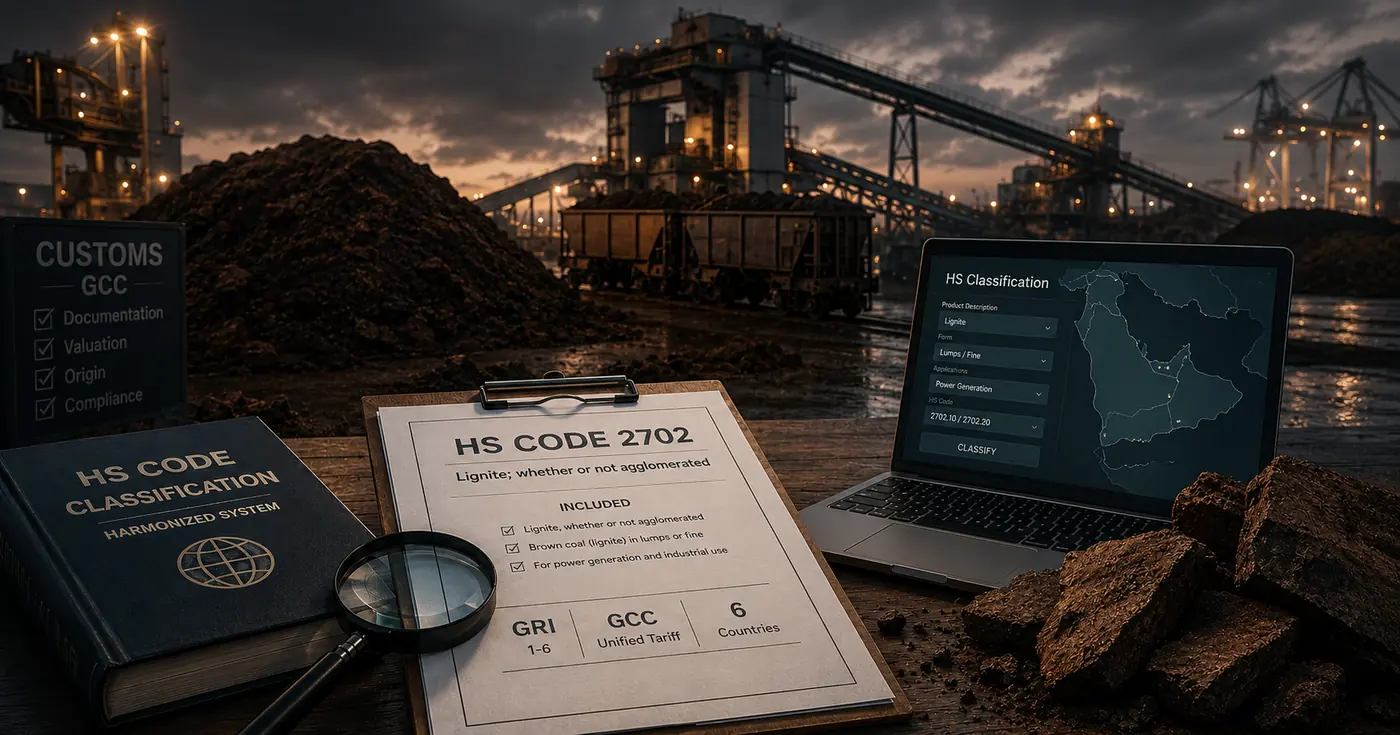


The Harmonized System (HS) in GCC Countries From 6 Digits to the 12-Digit Tariff Code
🧭 Introduction
The Harmonized System (HS) is the global foundation of customs classification. In GCC countries, this global system is applied at the 6-digit level and extended into a 12-digit tariff code structure, which represents the current and officially adopted format for customs declarations.
Earlier formats using 8 or 10 digits existed during transitional phases. Today, however, 12-digit HS codes are the operative standard across GCC customs systems.
🔹 What Is the Harmonized System (HS)?
The Harmonized System is an internationally standardized nomenclature for classifying traded goods, administered by the World Customs Organization (WCO).
- Used by more than 200 customs administrations worldwide
- Covers over 98% of global merchandise trade
- Forms the legal basis for customs tariffs and trade statistics
Core rule: The first 6 digits of an HS code are globally harmonized. Any digits beyond this level are regional or national extensions.
🔢 HS Code Structure in the GCC (Current Practice)
GCC customs administrations apply HS codes in a layered structure, culminating in a 12-digit tariff code.
| Digits | Level | Description |
|---|---|---|
| 2 digits | Chapter | Broad product category |
| 4 digits | Heading | Main product group |
| 6 digits | HS Subheading | Globally harmonized classification |
| 7–12 digits | GCC / National extensions | Tariff, regulatory, and statistical detail (current GCC standard) |
Note: 8-digit and 10-digit formats were previously used in some GCC systems but have since been consolidated into the unified 12-digit structure.
🏛️ The GCC Unified Customs Tariff
The GCC Unified Customs Tariff aligns duty rates and tariff treatment across member states, while allowing each country to apply additional statistical or regulatory detail within the shared 12-digit framework.
This approach ensures regional consistency without limiting national enforcement and data requirements.
⚠️ Common Classification Errors
- Declaring only the 6-digit HS code instead of the full 12-digit tariff code
- Using outdated 8- or 10-digit codes
- Copying codes from another GCC country without verification
- Ignoring section notes, chapter notes, and legal texts
Compliance tip: In the GCC, a declaration is incomplete if it does not reflect the correct 12-digit HS tariff code.
📌 Why the 12-Digit HS Code Matters
The declared 12-digit HS code directly affects:
- Customs duty and tax calculation
- Permit and approval requirements
- Eligibility for exemptions or preferences
- Post-clearance audit and reassessment risk
⚖️ Disclaimer
This information is provided for guidance purposes only and does not constitute legal or customs advice. HS interpretation and tariff extensions may vary between GCC member states and are subject to change. Always confirm the applicable 12-digit tariff code and requirements through official customs authorities.